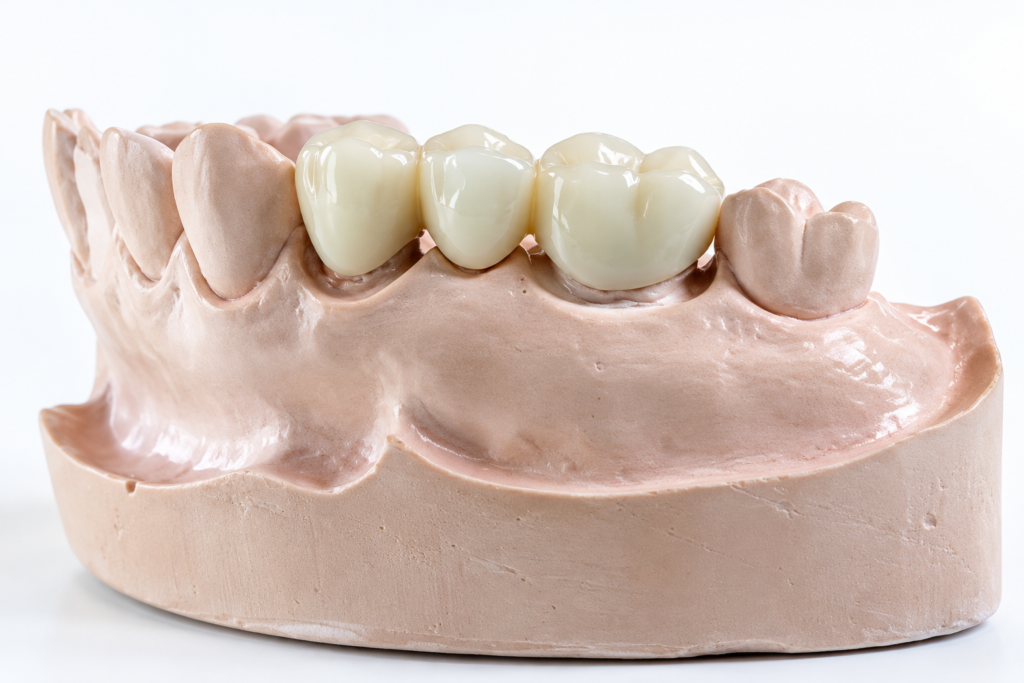
Dental Crown/ Cap
What is Dental Crown or Dental Cap?
A dental crown and a dental cap are actually something similar. A crown can likewise be put on top of dental inserts. Crowns are utilized to ensure, cover and re-establish the state of your teeth when fillings don’t tackle the issue. Dental crowns can be established of metals, porcelain, resin, and ceramic.
Dental Crown/ Cap Treatment Procedure, Step by Step
A crown is set after a dental implant procedure or root canal. Most dental crowns method require one day to finish.
Numerous workplaces additionally use CAD/CAM machines to make same-day crowns, removing the requirement of a second visit.
First Visit — Tooth Reshaping, X-Ray, and Temporary Crown Insertion
Initially, a dental specialist takes an x-ray of the patient’s tooth and jaw. At that point, they reshape and form the tooth, based upon the sort of a crown. Since metal crowns are more slender, they require minimal measure of tooth elimination.
After fruitful tooth planning, a temporary crown is set over the tooth while the lifelong crown is being made in GDS Lab.
Second Visit — Permanent Crown
The temporary crown is eliminated after around three weeks and the permanent crown is set. Ganpati Dental Specialist will ensure the shade of the dental crown coordinates with your enclosed teeth and fits in your mouth.
Before crown placement, a local anesthetic is regulated (just if the patient asks for it). This medicine numbs the treated region during the procedure, which guarantees you won’t feel any distress. At that point, a special dental cement is set to keep the crown set up.
Types of Dental Crown/ cap
There are five kinds of dental crowns accessible, including:
Porcelain-Fused-to-Metal Crowns
The most widely recognized helpful material for dental crowns and bridges is a combination of porcelain and metal. At the point when porcelain and metal are warmed together, the porcelain chemically combines to the oxides on the metal, which makes a long-lasting bond.
Porcelain-fused-to-metal crowns are tougher than normal porcelain since they are upheld by a metal construction. They likewise mix in well with the shape, look, and capacity of your natural teeth.
Metal Crowns and Gold Alloys
Metal crowns arrive in a couple of various structures and shades. They give a solid bond, are break safe, and don’t wear away teeth. These crowns commonly comprise gold, copper, and different metals. Some metal crowns are formed of non-noble metals, that are solid and corrosion safe.
Crowns require the expulsion of tooth structure before placement. Metal-based crowns require minimal measure of elimination, making them a more moderate alternative.
Stainless Steel Crowns (SSCs)
Stainless steel crowns are simply used to re-establish primary (baby) teeth. SSCs are set after pulpotomy treatment or when typical cavity fillings, like amalgam fillings, are probably going to fail.
Cosmetic Crowns (Ceramic)
Ceramic crowns are formed of porcelain. In dentistry, porcelain is utilized to make tooth-colored dental materials, like cosmetic crowns, that copy the look, shape, and capacity of normal teeth.
Cosmetic crowns re-establish anterior (front) teeth and mix in with your normal tooth tone. They are solid, long-lasting, and don’t chip or break easily. The best and common option in contrast to all-Ceramic crowns is “zirconia,” which is really metal.
All-Resin Crowns
All-resin restoration is more affordable than metal, ceramic, gold, and porcelain crowns. In any case, dental specialists don’t regularly suggest resin crowns since they are more helpless against cracks, wear, and tear, and don’t last long.
Resin is a more slender and more delicate material than other dental restorations, like metal and porcelain. Resin restoration is just utilized on rotted infant teeth, rather than permanent teeth.
Alternatives of Dental Crown/ cap
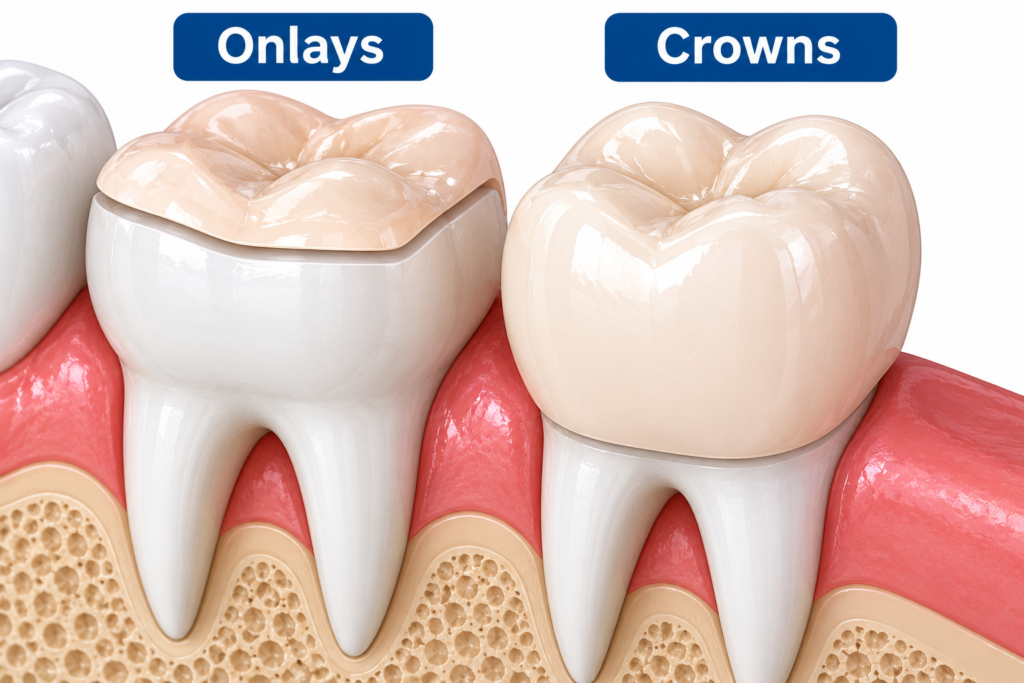
- Porcelain Onlays: Porcelain onlays are a more secure methodology, protecting a greater amount of your natural tooth structure, which in the end prompts a better mouth. The porcelain onlay is attached to your natural tooth’s enamel, assisting it with staying away from fracture, while saving the greater part of the enamel. Just 2% of dental specialists in the US play out this technique consistently, as indicated by a new investigation of the ADA. This system requires a significant degree of abilities and takes more work and time, yet when performed by the correct dental specialist, it tends to be an extraordinary option in contrast to getting a dental crown.
- Phasing Treatment: In certain cases, you can put a filling rather than a crown. Although a crown would be an ideal solution, putting a filling could get you time until you get a more complete treatment.
- Utilizing Provisional Crowns: In certain events, your dental specialist will actually want to utilize an in-office manufactured crown, also called a temporary crown. The temporary crown can be bonded to the tooth and purchase the patient time until the person in question can bear the cost of a more complete treatment. The disadvantage to temporary crowns is that they are just impermanent. All things considered, a temporary crown will last 3-9 months. Keeping a brief crown too long can bring about the patient losing the tooth.
- In-office lab Indirect Resin Crowns: Despite the fact that not many dental specialists utilize this methodology, in-office lab indirect resin crowns are a nice short-term alternative in contrast to a crown. An indirect resin crown is a crown made out of resin (rather than porcelain). The indirect resin crown is made in the workplace by the specialist and completed around the same time. Although this technique is performed exclusively by a couple of specialists, it can save you time and cash temporarily
Dental Crown/ cap Benefits
There are numerous advantages that accompany picking dental crowns. That is the thing that makes them one of the more famous restorative choices individuals are picking these days. These are a couple of the advantages:
They strengthen teeth
A dental crown totally covers a tooth. This a weak tooth its strength back so it can keep doing the work it should manage without the stress of becoming further damaged. Crowns additionally help shield a tooth from any further decay that can further harm it. This makes them a typical restorative system after somebody goes through root canal treatment.
They restore teeth
A dental crown can be utilized to restore a tooth back to its unique size and shape. This sort of restoration is essential when the entire teeth are not coming together as they ought to. This can cause different sorts of bite issues. Crowns can give a dental patient a full working mouth. This permits them to eat and talk without issue.
They stay in their place
A dental crown is forever positioned over a tooth. This implies it will remain exactly where it should, unlike dentures which can possibly move or shift around. This implies crowns are comfortable to wear as their permanent part of one’s mouth as opposed to having dentures that lay freely on top of the gums.
They make smiles look better
A dental crown can cover various tooth defects, including discolored and chipped teeth. A crown can be made to coordinate with the remainder of the teeth, making for a natural look that makes for a more wonderful-looking smile. Crowns that are made utilizing porcelain materials are stain safe and accordingly a typical decision for those wanting a smile makeover.
Dental Crown/ cap Side-effects
Uneasiness or sensitivity
Your recent crowned tooth might be sensitive following the procedure as the anesthesia wears off. If the tooth that has been crowned still has a nerve in it, you may encounter some warmth and cold sensitivity.
Chipped crown
Crowns made of all porcelain or porcelain combined to metal can at times chip. If the chip is small, a composite resin can be utilized to fix the chip with the crown staying in your mouth. This is typically a temporary fix. If the chipping is broad, the crown may be replaced.
Loose crown
Sometimes the cement washes free from the crown. In addition to the fact that this allows the crown to turn out to be free, it permits bacteria to spill in and cause decay to the tooth that remains.
Crown falls off
Sometimes crowns fall off. Reasons incorporate decaying of the hidden tooth and loosening of the cementing material used to put the crown. If your crown falls off, clean the crown and the front of the tooth. You can supplant the crown temporarily utilizing dental glue or transitory tooth cement that is sold in stores for this reason.
Allergic reaction
Since the metals used to make crowns are normally a combination of metals, a hypersensitive reaction to the metals or porcelain utilized in crowns can happen, however, this is extremely rare.
Dark line on crowned tooth close to the gum line
A dark line close to the gum line of your crowned tooth is typical, especially if you have a porcelain-fused-to-metal crown. This dark line is basically the metal of the crown appearing on the other side.
Dental Bridge
A dental bridge is a lasting apparatus that replaces a missing tooth or missing teeth. It’s comprised of a few pieces that are melded to settle into the open space where your tooth or teeth used to be. Dental bridges are an option in contrast to partial dentures. They fill both practical and aesthetic needs, empowering you to eat and talk better as well as re-establishing your teeth’ appearance. The bridge might be made of a few unique sorts of material, including gold, alloys, or porcelain.
Dental Crown/ cap Vs Filling
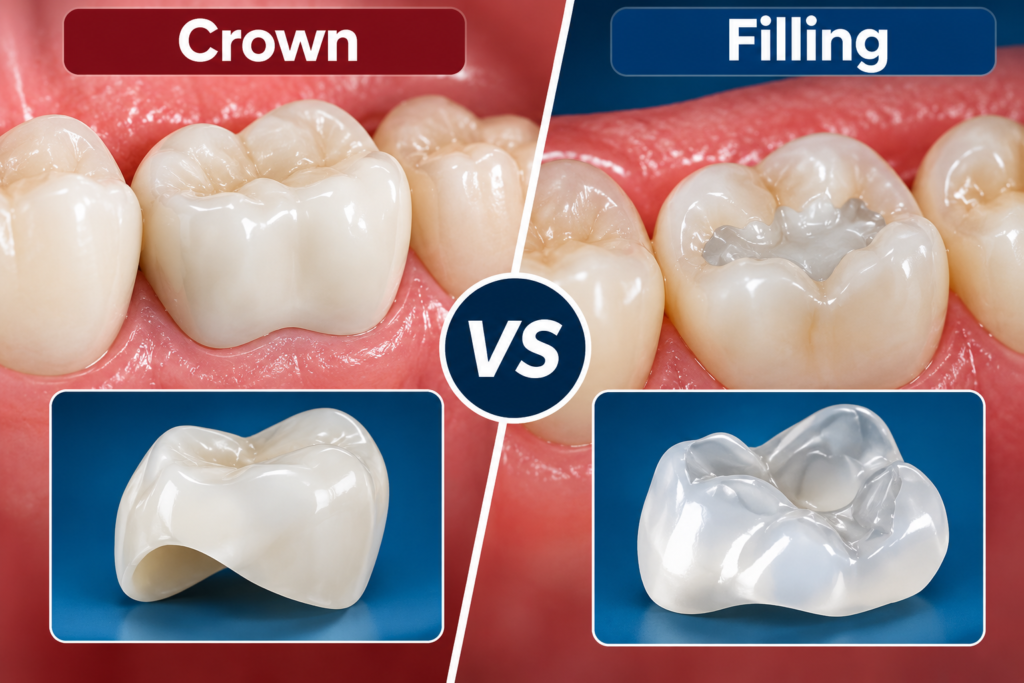
The difference between a crown versus a filling is that in a crown, no material is eliminated as the crown sits over your current tooth. With a filling, the decayed tooth material is taken out, the tooth is cleaned, lastly, it is filled. If a considerable segment of your tooth needs filling, a superior solution is usually the crown since fillings don’t give you a similar sort of protection as crowns do. Additionally, if the filling is incredibly huge, it can make the tooth break, making it irreparable.
Dental Crown/ cap Vs Veneers
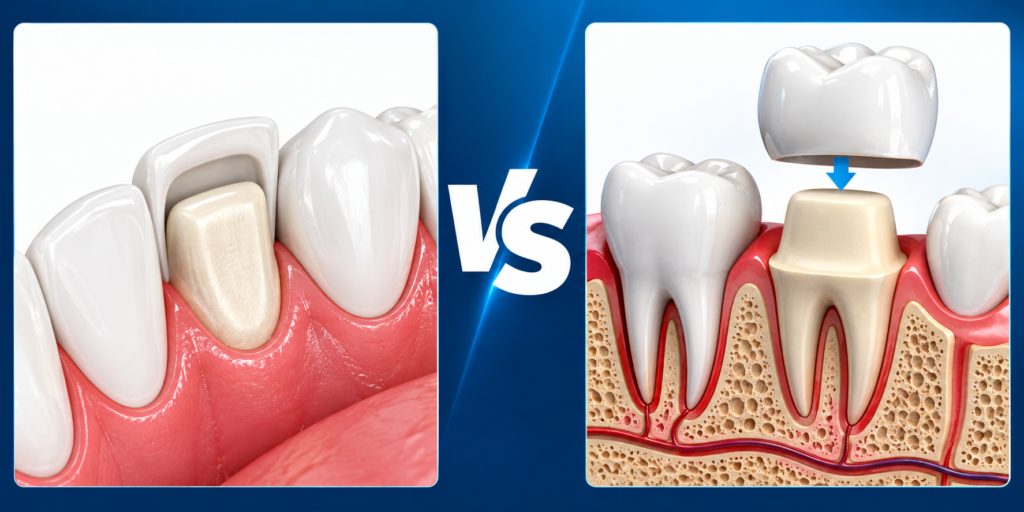
Veneers and crowns are both dental restoration strategies that can improve the look and capacity of your teeth. The principle distinction is that a veneer covers just the front of your tooth and a crown covers the whole tooth. A veneer is normally made of thin porcelain and is attached to the front of a tooth. The porcelain is color-coordinated to your natural teeth. Veneers are solid yet fragile, sharp or repeated effects can dislodge or break them. A crown encases the whole tooth. It tends to be made of metal, porcelain, or a blend of both. It is usually around twofold the thickness of a veneer, making it more resistant and durable to breaking than a Veneer.
Dental Crown/ cap Vs Onlay
A crown is a cap for your tooth and is most appropriate for restoring teeth with broad decay. An onlay is a more conservative treatment that is more suited to a tooth with less decay since it covers a part of the tooth. Despite the fact that crowns are somewhat stronger, an onlay is still pretty much as solid as a natural tooth. However, the onlay is attached to the tooth suitably, it can still last as long as a crown. Onlays are basically the same as crowns, yet are utilized for teeth that actually have some healthy tooth structure and don’t need a full crown.
Dental Crown/ cap Experience
The patient may experience some uneasiness after having a crown set, yet after a couple of weeks, it shouldn’t do any harm. Infections, cavities, broken teeth, or different issues might be the reason for your pain. If your toothache doesn’t disappear, see a dental specialist, so you can sort out what’s happening.
